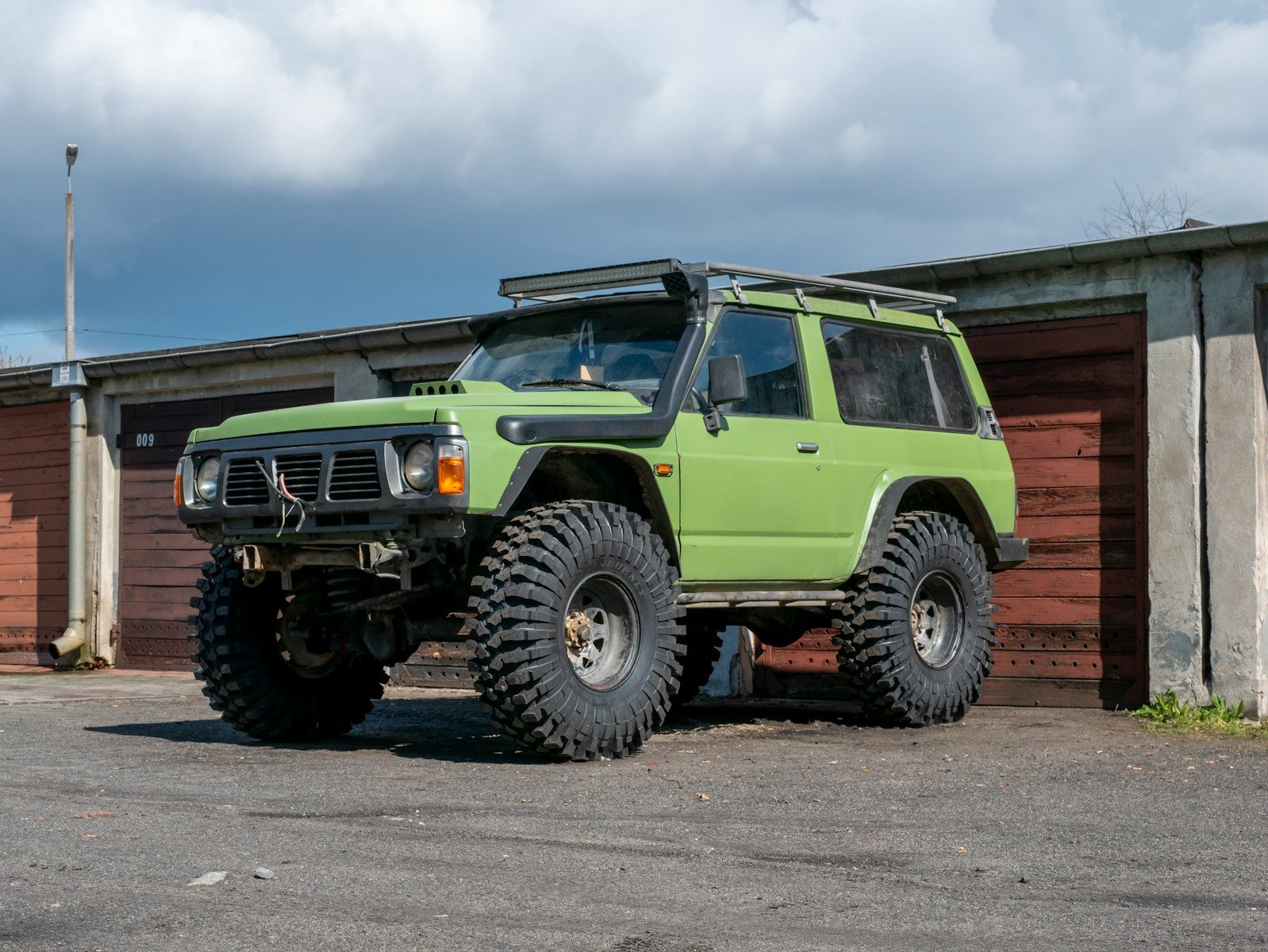
Air pressure is the off-road driver’s secret weapon. The same tires that perform predictably on the highway transform their character when pressure drops, gaining traction over loose surfaces, conforming to obstacles, and floating over soft ground in ways no tread design alone can achieve. Mastering pressure strategy is one of the largest improvements available to anyone serious about taking their vehicle off pavement.
Highway pressure exists to support the weight of the vehicle on a hard, flat surface. It typically falls between thirty and forty pounds per square inch for passenger vehicles and somewhat higher for trucks and vans. At these pressures, the tire is firm, the contact patch is small, and rolling resistance is low. Fuel economy and tire longevity are optimized, but the tire has minimal ability to conform to anything beneath it.
Off-road, the surface is rarely flat or hard. Rocks, ruts, sand, mud, snow, and gravel all reward a softer tire that can deform around obstacles and spread the contact patch over more area. Lowering pressure achieves this almost magically. At twenty pounds, a tire’s contact patch grows substantially. At fifteen pounds, the tire begins to wrap around small obstacles and grip surfaces it would have skidded across at higher pressure. At ten pounds, the contact patch can double in length, dramatically improving traction in sand and snow.
Different terrains call for different pressures. Hard-packed dirt roads benefit from a modest reduction to perhaps twenty-five pounds, smoothing the ride without dramatic effect on handling. Loose gravel or fire roads work well around twenty pounds. Technical rock crawling drops pressure further, often into the low teens, allowing the tire to mold around rocks for grip and absorbing impacts that would otherwise transmit shock to the vehicle. Sand demands the lowest pressures of all; below ten pounds, the tire balloons outward, distributing the vehicle weight over a broad footprint that floats rather than digs in.
Snow driving presents specific considerations. Deep, fluffy snow rewards low pressure to float on top and maintain forward motion. Packed snow on roads is closer to ice than to off-road conditions; high pressure with proper winter tires usually produces better results than low pressure on summer rubber. Reading the surface and adjusting accordingly is the skill that separates competent winter drivers from struggling ones.
Mud is the trickiest surface for pressure tuning. Loose, deep mud benefits from low pressure that lets the tire spread and use its tread to find solid ground beneath. Slick, shallow mud over hard ground can be handled at higher pressures with the focus on tread design rather than footprint size. Reading the depth and consistency before committing to a pressure strategy prevents many embarrassing recoveries.
The tools of pressure management include a quality compressor, a fast deflator, and a reliable gauge. The compressor must be capable of refilling tires from low pressures to highway pressure within reasonable time; cheap units take twenty minutes per tire, while quality compressors do the job in three or four minutes. Deflators range from simple stem-removal tools to automatic units that drop pressure to a preset value. The gauge should read low pressures accurately, since highway gauges often lose precision below fifteen pounds.
Beadlock wheels enable extreme low pressure use. Without beadlocks, dropping pressure below ten pounds risks unseating the tire bead during cornering, especially on aluminum wheels with smaller bead seats. Beadlocks clamp the bead mechanically and allow operation at single-digit pressures with confidence. They are essential equipment for competition rock crawlers and serious technical trail riders, and unnecessary for milder use.
The art of pressure adjustment includes knowing when to reset. Lowering pressure for a sand stretch and forgetting to refill before reaching highway speeds creates a dangerous situation. Soft sidewalls flex excessively at speed, generating heat that can destroy the tire and even cause failure that crashes the vehicle. Refilling at the trailhead before any highway driving is non-negotiable safety practice.
Speed limits with reduced pressure must be respected. Manufacturers and experienced off-roaders generally suggest staying below twenty-five miles per hour with pressures below twenty pounds. Higher speeds at low pressure quickly heat the tire and risk damage. Off-road driving is rarely fast anyway, so this restriction matches typical practice.
Pressure also affects ride quality and handling. Reducing pressure softens impacts dramatically, making rough trails far more comfortable for passengers. The vehicle becomes more compliant over washboard surfaces, less likely to bounce wheels off the ground, and more controllable on loose surfaces. The penalty is increased rolling resistance, slower reflexes in evasive maneuvers, and the bead-roll risk at extreme low pressures.
Tire and wheel combinations affect optimal pressure ranges. Larger sidewalls allow more pressure variation before the tire becomes either rock hard or unstable at low pressure. Stiff sidewalls common in load-rated truck tires resist bead unseating better than soft sidewalls in passenger tires. Aspect ratios above seventy work better for serious low-pressure use than aspect ratios below fifty.
The right pressure strategy depends on the terrain, the vehicle, the tires, and the speed. Experienced drivers develop instinct over years, learning what their specific setup likes on different surfaces. Newer drivers benefit from starting conservatively, twenty pounds for general off-road, fifteen for technical work, and adjusting from there based on results. Always carrying the means to adjust pressures both ways turns a vehicle into a flexible tool that adapts to whatever the trail provides.