Brake fluid maintenance ranks near the bottom of the awareness list for most drivers, well behind tires, oil, and even cabin air filters. Yet brake fluid degrades reliably over time and affects safety in ways that most owners never realize until something goes wrong. Understanding why brake fluid needs regular replacement, how the degradation happens, and what symptoms appear when service is overdue closes a critical gap in vehicle care.
Brake fluid is hygroscopic, meaning it actively absorbs water from the surrounding air. The brake system is sealed, but not perfectly; moisture migrates through rubber hoses, through master cylinder seals, and through the air space above the fluid in the reservoir. Over years, the fluid accumulates water content from these slow leaks. Most fresh DOT 3 brake fluid contains essentially zero water; after two or three years in service, the same fluid can contain three percent or more.
Water in brake fluid causes two problems. First, it lowers the boiling point dramatically. Fresh DOT 3 fluid boils at around 401 degrees Fahrenheit; the same fluid at three percent water content boils at around 284 degrees. Heavy braking on a long mountain descent can heat the fluid past these thresholds, causing it to vaporize. Vapor is compressible while liquid is not, so the vaporized fluid creates a soft pedal or, in extreme cases, complete loss of braking, an event drivers experience as the pedal sinking to the floor with no resistance and no stopping power.
The second problem is corrosion. Water and the additive packages in brake fluid form an aggressive mixture that attacks the metal components of the brake system from the inside. Brake calipers develop pitting that causes pistons to stick. ABS hydraulic units corrode and fail. Master cylinder bores roughen, causing internal seals to leak. Brake lines develop pinhole rust through from the inside out. All of these failures stem from old brake fluid, and replacing fluid on schedule prevents nearly all of them.
Most manufacturers specify brake fluid replacement every two to three years, regardless of mileage. Many drivers and even many shops ignore this interval because the fluid still looks fine in the reservoir. Visual inspection is unreliable; clear fluid can be heavily contaminated with water, and dark fluid can sometimes still be within specifications. Test strips are a useful tool, changing color in proportion to water content and providing a quick check during routine service. Refractometers and electronic moisture meters give more precise readings.
The symptoms of degraded brake fluid develop slowly. The pedal feels slightly soft or spongy compared to a fresh system. Stops from highway speeds during heavy traffic show progressive pedal travel as the fluid heats. The first few panic stops feel normal, but successive stops require deeper pedal travel as the fluid temperature builds. ABS interventions feel less crisp, with the pedal pulsing in a less defined manner. None of these symptoms is dramatic, and drivers often adapt without noticing the gradual decline. The day the brakes fail unexpectedly is usually the first time the driver realizes how compromised the system has become.
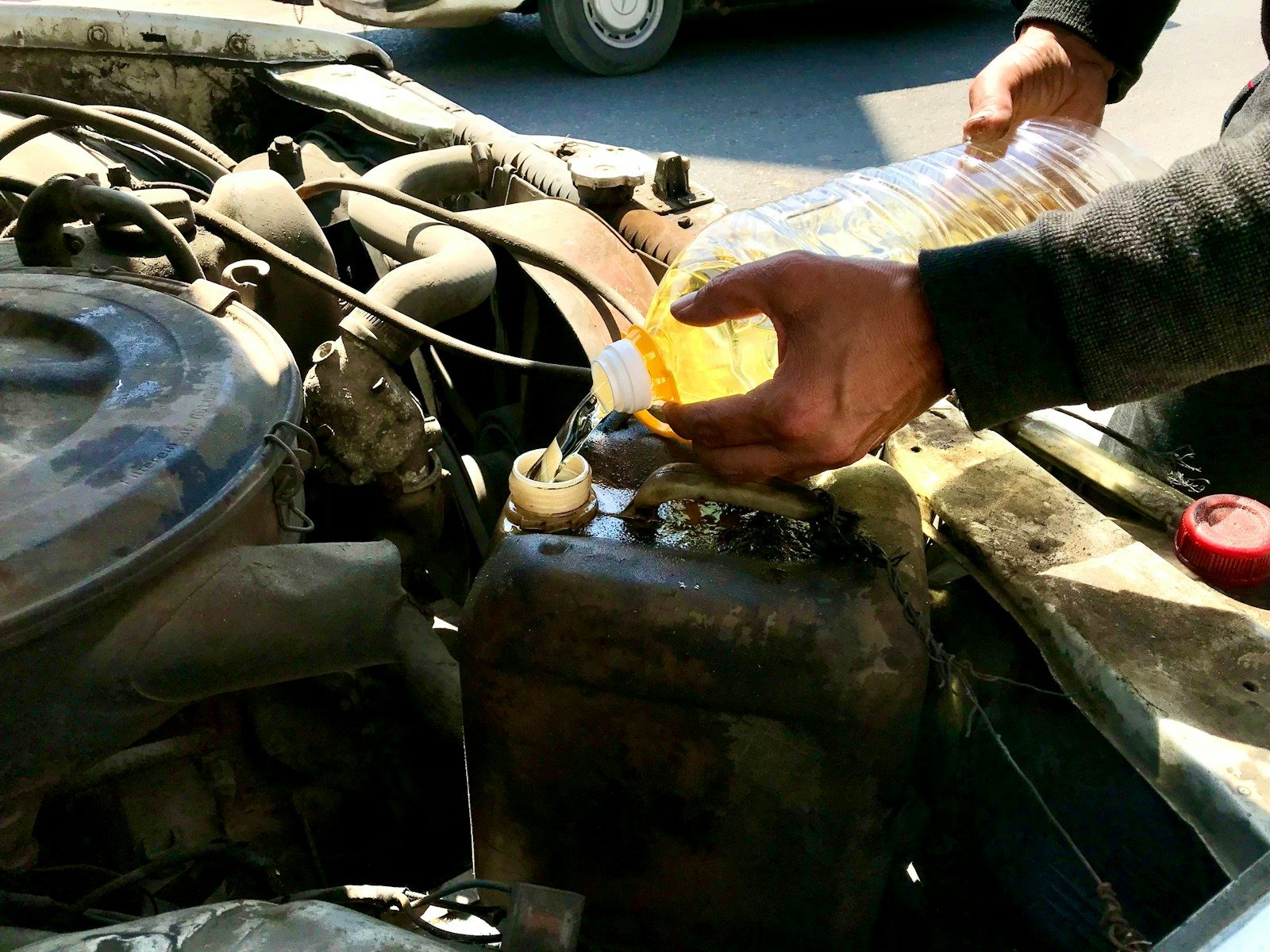
Replacing brake fluid is more involved than topping up the reservoir. The contaminated fluid lives throughout the system, in the lines, calipers, and ABS unit. Simply pouring fresh fluid into the reservoir does not displace the old fluid in the wheels. Proper service requires bleeding each wheel until clean fluid emerges, with the master cylinder reservoir kept full throughout to prevent air ingress. Modern vehicles with ABS often require additional bleeding through the ABS unit, sometimes via a scan tool that activates the pump and valves to flush the internal passages.
The order of bleeding traditionally starts with the wheel furthest from the master cylinder and works inward, but each manufacturer specifies its own sequence and modern vehicles with diagonal-split systems may follow different patterns. Pressure bleeders speed the process by maintaining constant pressure on the master cylinder, while vacuum bleeders pull fluid through the system at each wheel. Two-person bleeding, where one person pumps the pedal while another opens and closes the bleeder, is the traditional method and works fine on most vehicles.
Choice of replacement fluid matters. DOT 3, DOT 4, and DOT 5.1 are glycol-based fluids that mix freely with each other; choosing a higher specification than required is generally safe and may improve performance. DOT 5 is silicone-based and incompatible with the others; mixing the two types ruins the system. DOT 4 is the most common modern specification and works well in most vehicles, while DOT 5.1 offers slightly higher boiling points and is preferred for vehicles used in mountains or for towing.
Used brake fluid is hazardous waste and should be disposed of properly, never poured down a drain or onto the ground. Most auto parts stores accept used fluid for recycling.
Beyond scheduled replacement, brake fluid should be inspected during every regular service. The reservoir should be checked for level and contamination, with attention to any sediment at the bottom. The master cylinder seals can be inspected by watching for fluid leakage. The reservoir cap should seal tightly to limit air exchange.
The cost of a brake fluid flush is modest compared to its safety value and to the cost of repairs caused by neglect. A corroded ABS module is an expensive part, and a failed master cylinder requires significant labor. Replacing the fluid every two to three years is an excellent insurance policy that pays for itself many times over by extending the life of every metal and rubber component in the brake system. It is also one of the easiest ways for an owner to demonstrate genuine care for the vehicle, the kind of maintenance that separates careful owners from neglectful ones over the years of ownership.