Suspension is the silent partner in every drive. It cushions the body from road impacts, keeps the tires in contact with the pavement, and translates the vehicle’s mass into controlled motion through corners. Most drivers think about suspension only when something goes wrong, but understanding how it works deepens appreciation for vehicle design and reveals where ride and handling actually come from.
The basic job of suspension is conflict resolution. The body wants to travel in a smooth straight line, while the wheels need to follow every bump, dip, and pothole the road throws at them. The suspension links the two, absorbing road inputs while keeping the wheels controlled. Springs handle the absorption, dampers control the rate of motion, and a system of arms, joints, and bushings keeps the wheels pointed where they should be.
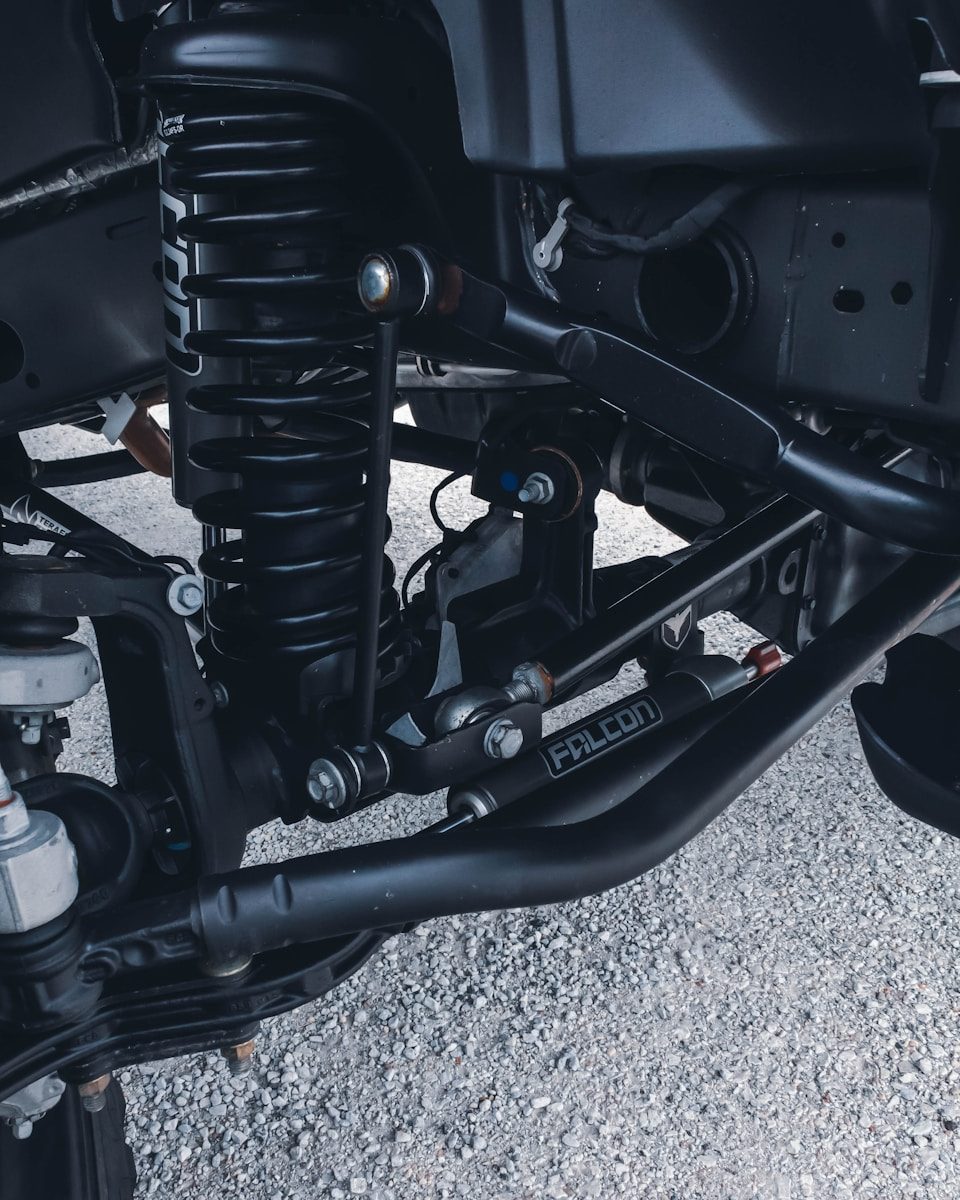
Springs come in several forms. Coil springs are the most common, found on nearly every modern passenger car. Leaf springs survive on trucks and off-road vehicles where simplicity and load capacity matter more than ride sophistication. Torsion bars use a twisting steel rod as a spring and are common on certain truck and luxury vehicle suspensions. Air springs use compressed gas in flexible bladders, allowing height adjustment and ride tuning. Each type has trade-offs in cost, weight, ride quality, and adjustability.
Spring rate, measured in pounds per inch of compression, defines how stiff the suspension is. Soft springs absorb bumps gently but allow excessive body roll in corners. Stiff springs control body motion well but transmit more road harshness. Engineers spend enormous effort balancing these competing demands for the intended use of each vehicle. Sports cars use stiffer springs and accept harsher rides for sharper handling. Family cars use softer springs and compromise some handling for comfort.
Dampers, commonly called shocks or struts, control the rate at which the springs move. Without dampers, a spring continues to bounce after every bump, creating an uncontrolled motion called wheel hop. A damper converts the kinetic energy of spring movement into heat by forcing oil through small valves. The valving determines how the damper responds to slow movements like body roll versus fast movements like impact bumps. Modern adjustable dampers vary their valving electronically based on driving conditions, road inputs, and driver preferences.
Struts combine the damper and a spring perch into a single structural unit that also serves as part of the steering geometry. The MacPherson strut is the most common front suspension design in modern passenger cars, valued for its compactness, simplicity, and cost. Struts handle steering loads and suspension loads simultaneously, which makes them complex internally and somewhat compromised compared to dedicated dampers paired with separate suspension links.
Control arms, links, and joints define the path that the wheel follows as it moves up and down. Double wishbone suspensions use upper and lower control arms shaped like a stretched A, providing precise control of camber and toe through the suspension travel. Multi-link suspensions use four or more separate links to control wheel motion, allowing engineers to tune each motion independently for excellent handling and ride. Solid axles, surviving mostly on heavy trucks and off-road vehicles, link both wheels to a single beam, sacrificing ride sophistication for strength and simplicity.
Bushings connect suspension components to each other and to the body. Rubber bushings absorb noise, vibration, and harshness, but they also flex under load, allowing slight changes in alignment during cornering and braking. Polyurethane bushings flex less and provide more direct steering feel, but they transmit more harshness. Spherical joints offer the most precise control with the most noise, suitable for racing but rarely for street use.
Anti-roll bars, often called sway bars, link the left and right suspension on each axle. When the body rolls in a corner, the bar twists, transferring some of the load from the outside wheel to the inside wheel and reducing roll. Larger bars increase resistance to roll but also reduce independent suspension action over uneven surfaces, where one wheel hitting a bump tries to drag the other up with it through the bar.
Tuning all of these elements together is the art of vehicle dynamics. The spring rate, damping curves, anti-roll bar size, control arm geometry, bushing stiffness, and tire characteristics interact in complex ways. A suspension tuned for racetracks feels nervous and harsh on rough roads. A suspension tuned for comfort feels vague and unstable when pushed hard. Production vehicles aim for a usable balance, while modified vehicles can lean toward one priority at the expense of the other.
Maintenance focuses on the wear items. Bushings deteriorate over years, becoming softer, cracking, or separating from their metal sleeves. Worn bushings produce clunks over bumps, vague steering, and alignment that drifts even after fresh adjustments. Ball joints develop play that allows the wheel to move in ways the engineer never intended, ruining alignment and creating safety concerns. Dampers lose performance gradually, often going for tens of thousands of miles past their effective life before drivers notice. Spring sag affects ride height and the entire suspension geometry depending on it.
Replacement of suspension components in matched sets gives the best results. Replacing struts in pairs across an axle keeps both sides equally stiff. Replacing bushings together prevents one new and one old bushing from creating odd handling. Replacing wear items proactively, rather than reactively, preserves the engineered behavior of the vehicle through its service life.
Suspension is one of the most rewarding systems to understand. The gap between a fresh, well-tuned suspension and a tired one is enormous, often more dramatic than a tire change or any cosmetic improvement. Drivers who recognize the difference and maintain their suspensions properly get a significantly better vehicle for the same hardware they had to begin with.