A bicycle wheel looks simple from a few feet away, just a hoop with spokes connecting to a hub. Look closer and the engineering becomes fascinating. Every component is precisely tuned to its role, and the system as a whole transmits power, supports weight, and absorbs road imperfections through tension, geometry, and material science that has been refined over more than a century of cycling.
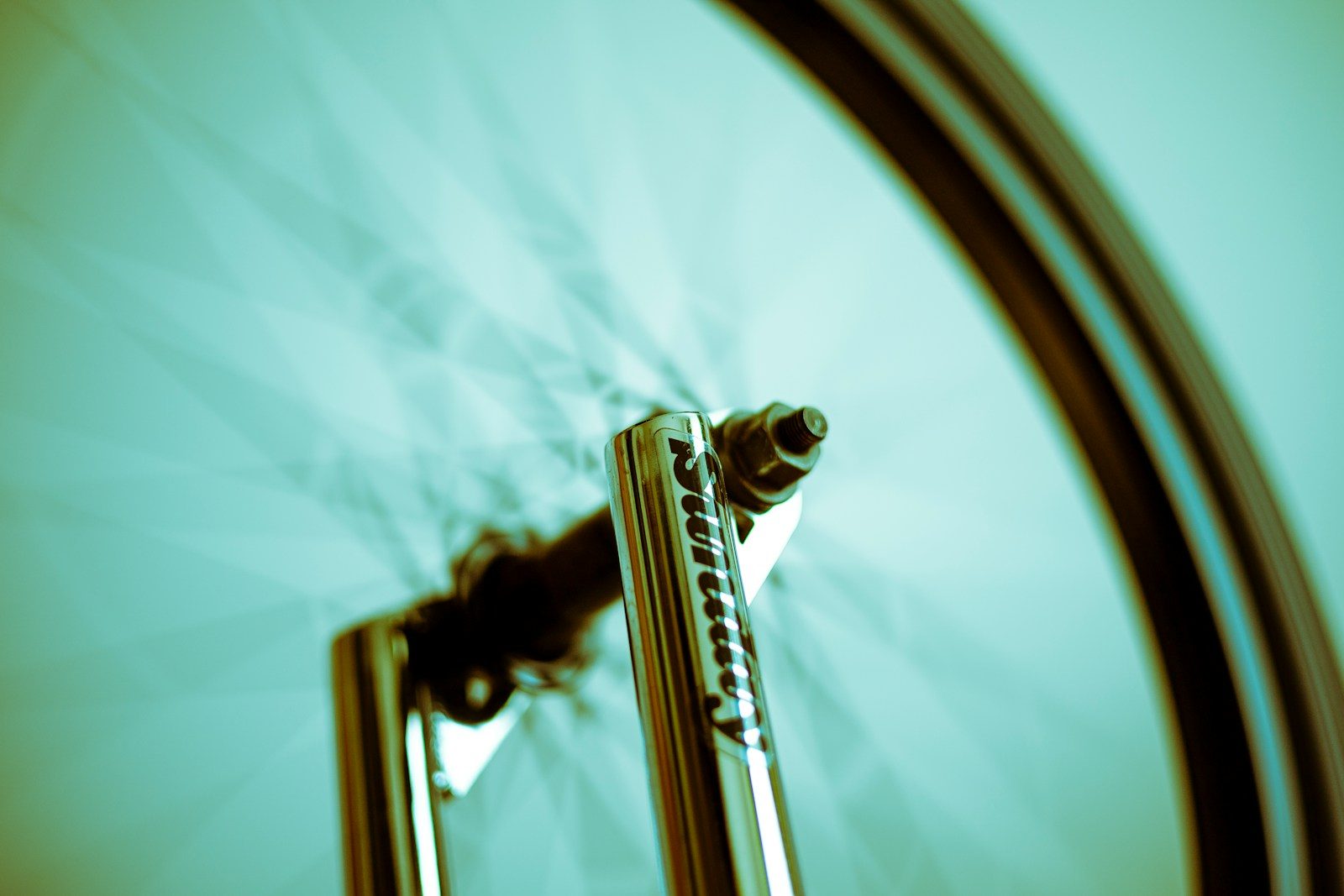
The hub sits at the center. It contains bearings that allow the wheel to spin freely on the axle, and it provides the structure that anchors the spokes. Front hubs are simpler than rear hubs because they don’t need to handle drive forces. Rear hubs include either a freewheel or freehub mechanism that allows coasting without driving the cranks, plus splines or threads to mount the cassette or freewheel that carries the gear cogs. Modern hubs have made significant gains in bearing quality and weatherproofing, with sealed cartridge bearings increasingly replacing the older cup-and-cone designs that demanded regular adjustment.
Spokes run from the hub to the rim, and they are far more sophisticated than they look. Most spokes are made from stainless steel, with the hub end formed into a J-bend or straight pull and the rim end threaded for a nipple. Spoke gauge is specified in millimeters, with thinner spokes saving weight at some cost in durability. Bladed and aero spokes flatten the cross-section to reduce wind drag. Carbon-fiber spokes appear on some high-end wheels, offering further weight savings at premium prices.
Spoke tension is what holds the entire wheel together. A correctly built wheel has every spoke under significant tension, pulling the rim inward against the inflated tire’s outward push. The tension distributes the load across many spokes during riding; at any moment, the spokes near the bottom of the wheel briefly lose some tension as the rim flexes, while the rest of the wheel continues to carry the load. Insufficient tension leads to spokes loosening over time, while excessive tension can crack rims or pull the hub flange apart.
Spoke pattern affects the wheel’s behavior. Radial lacing, where each spoke runs straight from the hub to the rim, produces the lightest possible wheel but transmits no drive forces. Cross patterns, where each spoke crosses one or more others on the way from hub to rim, transmit drive torque and braking forces effectively. Three-cross lacing is the most common pattern for general use, balancing strength, durability, and weight. Two-cross is found on lighter wheels, while four-cross appears on touring and tandem wheels needing extra durability.
The rim is the outer hoop that holds the tire and provides the brake surface on rim-braked bikes. Modern rims are usually aluminum alloy or carbon fiber, with steel rims persisting only on the cheapest bicycles. Aluminum rims are the workhorse choice, balancing weight, durability, cost, and brake performance. Carbon rims save weight and offer aerodynamic shapes, but they require careful inspection for damage and demand specific brake pads on rim-brake setups. Tubeless-compatible rims have specific bead profiles that hold the tire in place at low pressures and seal the tire to the rim with sealant.
Nipples are the small brass or aluminum fasteners that thread onto the spokes and pass through holes in the rim. Brass nipples are heavier but more durable; aluminum nipples save weight at some cost in longevity. Internal nipples mount inside the rim cavity and require special tools to access, while external nipples are easier to adjust but stick out into the airflow.
Tires are the most often replaced component but also the most variable. Clincher tires, the most common type, have wire or kevlar beads that hook into the rim shoulders and rely on inner tubes for air containment. Tubular tires, glued to special rims, are increasingly rare outside racing. Tubeless tires seal directly to compatible rims, eliminating tubes and allowing lower pressures with better grip. Tire choice affects rolling resistance, grip, puncture resistance, comfort, and weight, and matching the tire to the riding style is one of the most impactful upgrades available.
Hubs and rims must be matched in spoke count for the wheel to work. Twenty-eight, thirty-two, and thirty-six spoke wheels are the common counts, with lower counts saving weight and higher counts offering durability. Some modern wheels use lower counts with thicker spokes, achieving similar strength with fewer connections. Hub flanges have specific spoke holes that must align with the chosen lacing pattern.
The dishing of a rear wheel is a subtle but important detail. The cassette takes up space on the right side of the rear hub, pushing the right flange inward. To keep the rim centered between the dropouts, the right-side spokes are shorter and at a steeper angle than the left-side spokes. The right side carries more tension as a result, and the left side compensates with more spokes or different patterns in some designs. Building a properly dished rear wheel requires care and experience, and a poorly dished wheel never tracks straight.
Wheel building is part craft, part engineering. A skilled builder selects components, calculates spoke lengths, laces the wheel correctly, and brings tension up evenly over many cycles of adjustment. The finished wheel runs true side to side, true around its circumference, has even tension across all spokes, and is stress-relieved to settle the spokes into their final shape. Machine-built wheels approach but rarely match handbuilt quality, especially for higher-stress applications.
Maintenance for bicycle wheels is mostly minimal. Bearings benefit from occasional cleaning and grease replacement. Spoke tension should be checked annually or after any major impact, with adjustments made by a competent mechanic. Rims should be inspected for cracks, especially at spoke holes, and the brake track on rim-brake setups should be checked for wear before becoming dangerously thin. Tires need regular pressure checks and replacement when worn or aged.
A well-built bicycle wheel can last for tens of thousands of miles. A poorly built one may fail within hundreds. The difference comes from understanding the role of each component and respecting how they work together. The wheel may look like the simplest part of the bicycle, but it is one of the most engineered parts of any machine.