Wheels are designed to take continuous abuse, but there is a clear line between normal wear and damage that compromises safety, performance, and aesthetics. Recognizing the most common forms of rim damage, understanding how each affects the vehicle, and knowing which can be repaired versus which require replacement transforms a confusing topic into a practical decision tree that saves money and prevents bigger problems.
Curb rash is the most prevalent and least serious form of rim damage. It happens when a wheel scrapes against a curb during parking, leaving gouges, scratches, and abraded paint along the outer lip. Curb rash is almost always cosmetic; the structural integrity of the wheel is rarely affected. Aluminum alloy wheels show curb rash dramatically because the silver of the bare metal contrasts with the painted finish. Steel wheels covered with plastic hubcaps usually escape visible damage. Repairing curb rash is straightforward at a wheel refinishing shop, where the damaged area is sanded smooth, filled, primed, painted, and clear-coated to match the original finish. A skilled refinisher produces results that are nearly invisible at conversational distance.
Bent rims are the next category and represent the threshold where damage becomes serious. A bent rim can result from striking a deep pothole, hitting debris on the road, or running over a curb at speed. The bend may be obvious as a dent in the lip or barely visible until measured on a balancer. Bent rims cause vibration, often felt strongly through the steering wheel at certain speeds, and they leak air slowly because the bead seal is compromised. Repair is possible for bends of moderate severity. Specialty shops use hydraulic equipment to push the rim back into round, and the process can restore acceptable function on most aluminum wheels. Severely bent rims, especially those with kinks or creases, are not safely repairable and must be replaced.
Cracked rims represent the most dangerous damage and are essentially never repairable for safety reasons. Cracks can appear after a major impact, after years of stress concentration, or as a manufacturing defect. The crack may be visible from outside or hidden on the inner barrel where it announces itself only by air loss. Some shops claim to weld cracks, but a welded wheel cannot reliably regain its original strength because aluminum alloys lose their heat treatment during welding. Driving on a cracked rim risks a catastrophic failure at speed, and any rim with a confirmed crack should be replaced immediately. Forged wheels sometimes survive with a careful weld and return to street use, but dedicated track use should always end the wheel’s life.
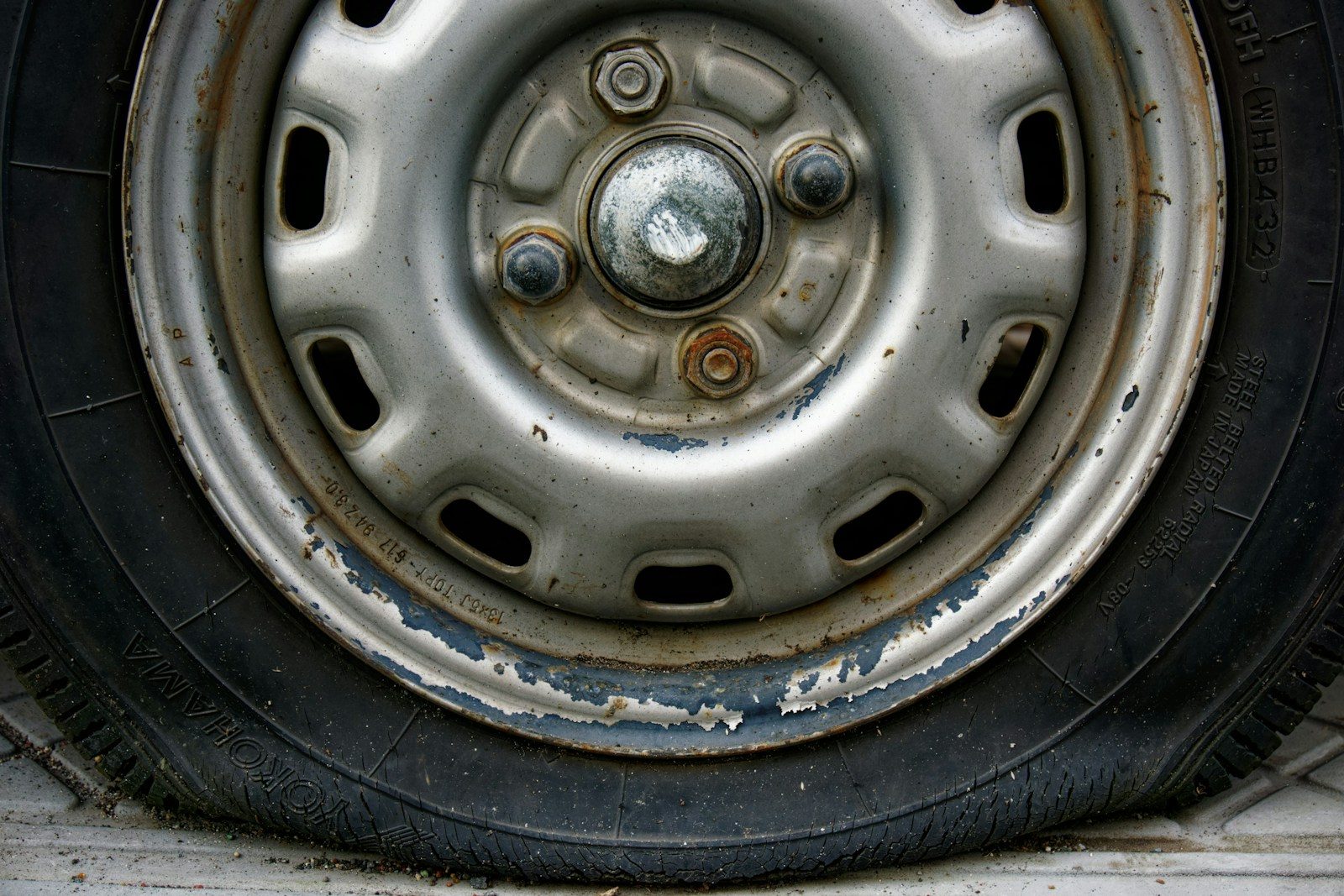
Corrosion is a slow killer of rims, especially in regions that use road salt in winter. Aluminum alloy reacts with salt, particularly at the bead seal where moisture trapped between the rim and the tire creates an electrochemical environment. Corrosion at the bead causes slow air leaks that drivers blame on the tire when the cause is the wheel. Removing the tire, sanding the corroded area smooth, applying a sealant, and remounting usually fixes the leak. Heavy corrosion on the cosmetic surfaces of polished or chrome wheels is harder to fix and often requires a full refinish.
Brake dust pitting is a related issue. The fine particles of brake material carried away during normal use are abrasive and slightly acidic, and over years they etch into the clear coat of alloy wheels. The result is a permanently dull, pitted finish that polishing cannot fully restore. Regular cleaning prevents the worst of this damage, especially after winter driving. A good wheel cleaner used every couple of weeks removes the brake dust before it bonds to the surface.
Bead damage occurs when the inner edge of the rim, where the tire seals, is dented, scratched, or corroded. Bead damage causes air leaks even when the tire and the rim look fine from outside. Mounting a tire on a damaged bead is futile; the air will leak regardless of how good the tire is. Smoothing the bead with abrasives and using a bead sealer can fix moderate damage, but severe bead deformation requires rim replacement.
Spoke cracks on multi-spoke alloy wheels are catastrophic and immediately disqualify a wheel from safe use. The forces concentrated through spokes during normal driving are enormous, and a cracked spoke is a wheel ready to come apart. These cracks are often missed during routine inspection because the underside of the spoke hides them. Anyone who suspects a crack should have the wheel inspected with proper tools, including dye penetrant testing if necessary.
Center cap damage and hub bore corrosion are less critical but worth attention. A loose or missing center cap is cosmetic but can allow water and dirt into the hub area. Corrosion at the hub bore can cause the wheel to seize onto the hub, making future service difficult and sometimes leading to the wheel becoming stuck after rotations or brake work.
Lug nut seat damage is a subtle but serious issue. The conical or radius seats where lug nuts contact the wheel can deform if a lug nut is overtightened or installed incorrectly. Damaged seats lead to lug nuts loosening over time, with the worst-case outcome being a wheel detaching while driving. Wheels with damaged lug seats should be carefully evaluated; in many cases, the damage means replacement is the only safe option.
Knowing the difference between cosmetic and structural damage helps the owner make informed decisions. A cosmetic refinish is a reasonable investment to restore appearance. A structural repair requires a competent specialty shop. A safety-critical condition demands replacement, no matter how tempting a cheaper repair sounds. Wheels carry the entire weight of the vehicle and absorb every impact between car and road; treating them with appropriate respect is one of the highest-value habits in vehicle ownership.