The act of pressing a brake pedal seems trivial, but behind that simple input lies one of the most refined safety systems on any vehicle. Modern brakes combine hydraulic engineering, electronic intervention, sophisticated friction materials, and computer-controlled stability systems to convert kinetic energy into heat in a controlled, predictable, and precisely modulated way. Understanding how the system works from the driver’s foot to the contact patch on the road clarifies why brake maintenance matters so much and why improper service can compromise the entire chain.
The journey starts at the brake pedal, mounted on a pivot that creates mechanical advantage. The pedal pushes a rod into a vacuum brake booster, a device that uses engine vacuum or an electrically generated equivalent to multiply the force applied by the driver. Without a booster, the effort required to stop a vehicle would be substantial, and panic stops would be slower and harder. The booster ensures that even a light pedal press can generate strong stopping force.
The booster pushes against the master cylinder, which converts mechanical force into hydraulic pressure. The master cylinder contains two pistons in series, each feeding a separate hydraulic circuit. This dual-circuit design is a critical safety feature: if one circuit fails, the other still provides braking on at least two wheels. Modern vehicles split the circuits in various ways, including front-rear split and diagonal split, with each layout offering specific advantages in failure modes.
Hydraulic pressure travels through brake lines to each wheel. The lines must be made of materials that resist corrosion, vibration, and heat. Steel lines run along the body of the vehicle, and flexible rubber or braided steel hoses connect the steel lines to the moving suspension parts at each wheel. The fluid inside these lines is brake fluid, a hygroscopic mixture that absorbs water from the atmosphere over time. Water in brake fluid lowers its boiling point and corrodes internal components, which is why brake fluid replacement at regular intervals is essential despite the system being sealed.
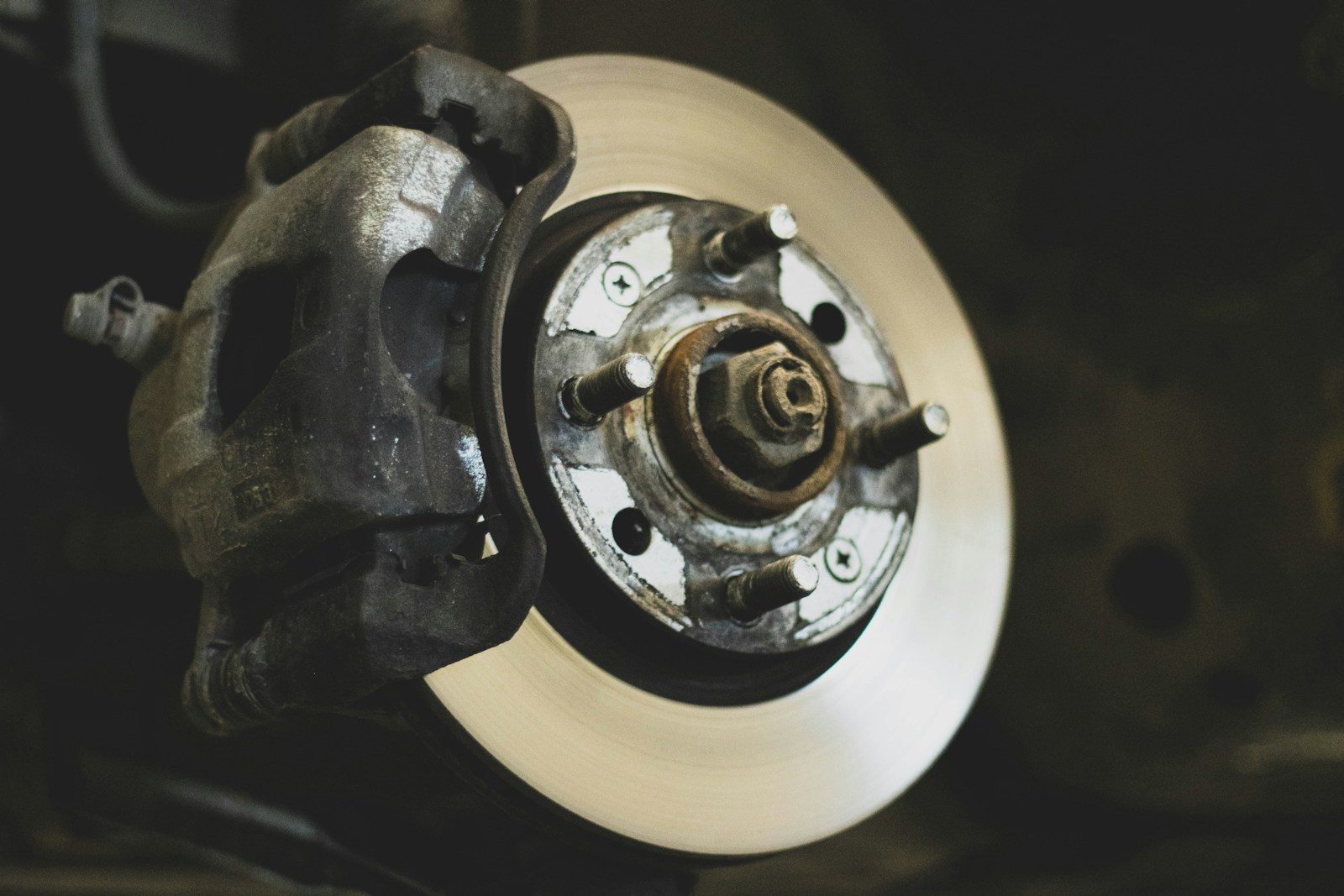
At each wheel, the hydraulic pressure pushes pistons in either calipers or wheel cylinders, depending on whether the brakes are disc or drum type. Disc brakes are now standard on most vehicles, at least at the front, and increasingly at the rear as well. The caliper holds two or more pistons that press brake pads against a rotating disc, the rotor, attached to the wheel hub. Friction between the pads and rotor converts the kinetic energy of the moving vehicle into heat, slowing the wheel and the vehicle.
Brake pads are engineered marvels in their own right. Modern pads use carefully blended friction materials that balance stopping power, fade resistance, wear rate, noise, and rotor wear. Different formulations, including ceramic, semi-metallic, and organic, suit different applications. Performance vehicles use pads that grip aggressively but wear quickly and create more dust. Family cars use pads that prioritize quiet operation and long life over outright performance.
Rotors come in solid, vented, drilled, and slotted variations. Vented rotors have internal vanes that pump air through the rotor for cooling, essential for managing heat under hard braking. Drilled rotors have holes through their faces that help vent gas and water, while slotted rotors have grooves on the friction surface that bite into the pads. Each style has trade-offs in cooling, weight, durability, and noise.
Drum brakes survive on the rear axles of some vehicles and on parking brake systems. They use brake shoes pressed outward against the inner surface of a drum. Drum brakes are inexpensive, self-energizing under forward motion, and well-suited to parking brake duty, but they are heavier, harder to cool, and prone to fade under repeated heavy use. Most modern vehicles have transitioned to discs at all four corners.
Modern braking adds extensive electronic control. Anti-lock braking systems prevent wheel lockup by rapidly modulating hydraulic pressure at each wheel, using sensors that detect impending lockup and a hydraulic control unit that pulses the brakes faster than any human could. Electronic stability control extends ABS by selectively braking individual wheels to keep the vehicle on the intended path during loss of control. Brake assist detects panic-style pedal applications and supplements driver effort to achieve maximum stopping. Hill hold features keep the vehicle stationary on an incline after the driver releases the brake, releasing as the accelerator is pressed.
Regenerative braking is now common on hybrid and electric vehicles. It uses the electric motor as a generator during deceleration, recovering energy that would otherwise be lost as heat. The transition between regenerative and friction braking is invisible to the driver in well-engineered systems, and it dramatically improves efficiency.
Brake-by-wire systems are emerging, replacing the hydraulic connection between the pedal and the wheels with electronic signals. The pedal becomes an input device, and a separate hydraulic or electric actuator at each wheel applies the actual braking force. This architecture allows for finer control, better integration with autonomous driving systems, and removal of the complex hydraulic plumbing.
Maintenance of all this complexity comes down to a small set of regular tasks: replacing pads when they wear thin, machining or replacing rotors as they wear or warp, flushing brake fluid every two to three years, and inspecting the system for leaks, corrosion, and wear. The sophistication of modern brakes does not eliminate the need for maintenance; it raises the cost of neglecting it. A driver who understands the chain from pedal to pad is far better equipped to recognize the early signs of trouble and address them before they become emergencies.