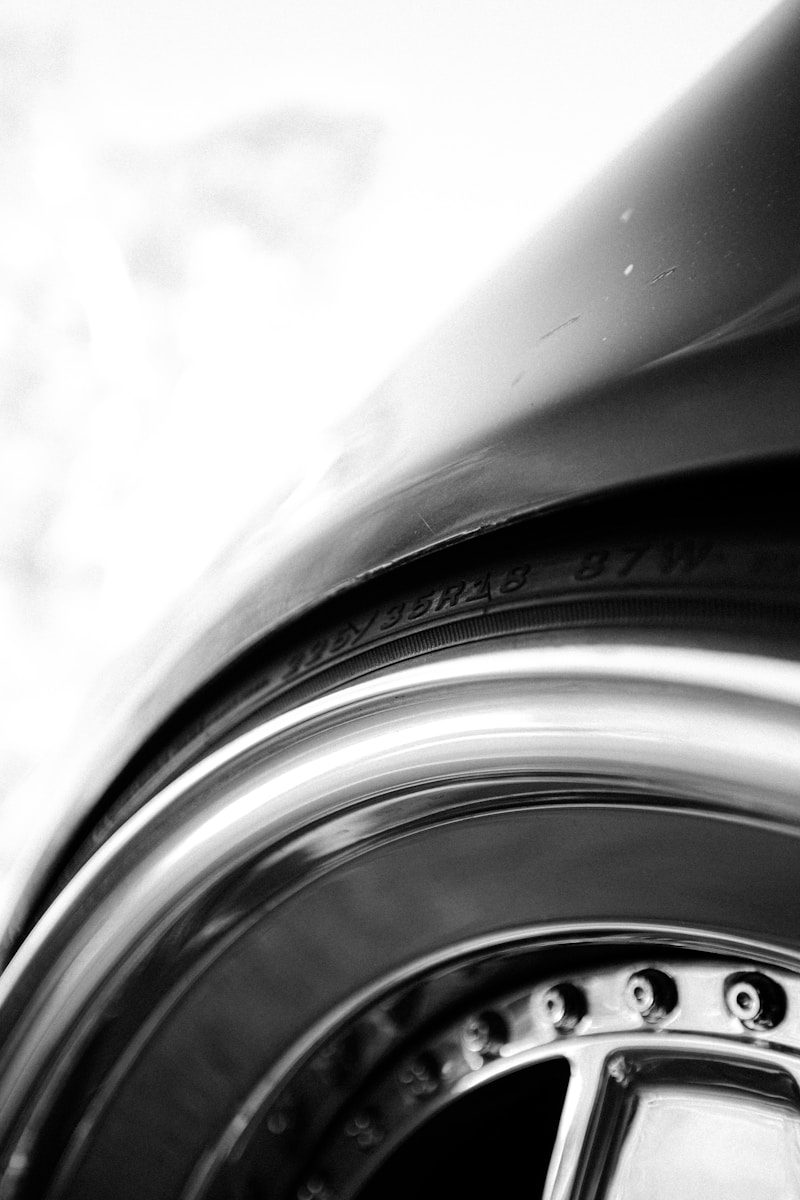
The sidewall of a tire is one of the most information-dense surfaces on any vehicle, and learning to decode it transforms a driver from a passive consumer into someone who can confidently choose the right rubber for any situation. The codes look intimidating at first, but every character tells part of the story of what the tire was designed to do, where it was made, and how long it has been waiting to roll.
Take a typical example like 225/45R17 94H. The first number, 225, is the section width in millimeters measured from sidewall to sidewall when the tire is mounted on its specified rim. The 45 is the aspect ratio, meaning the height of the sidewall is 45 percent of the section width. Lower aspect ratios produce that aggressive low-profile look and crisper steering response, but they also transmit more impact harshness and offer less protection to the wheel from potholes. The R indicates radial construction, which has been standard for passenger cars for decades but is still spelled out for clarity. The 17 is the rim diameter in inches, an oddly mixed metric that survives from the early days of the industry.
The 94 is the load index, a number that maps to a maximum weight per tire. A 94 corresponds to about 1,477 pounds, and the load index of every tire on a vehicle multiplied by four must comfortably exceed the gross vehicle weight. The H is the speed symbol, indicating sustained capability up to 130 miles per hour. Speed ratings range from L at the slow end to Y, often shown in parentheses for ratings above 186 miles per hour. The speed rating is not just about how fast the tire can go; it correlates with the construction quality, heat resistance, and handling precision, which is why high-performance vehicles specify high ratings even though their owners rarely approach those speeds.
Beyond the size, the sidewall carries a wealth of secondary information. The treadwear, traction, and temperature ratings appear under the UTQG label, a system that lets shoppers compare tires within a brand. A treadwear of 400 means the tire is rated to last roughly four times longer than a baseline of 100, though the test is loosely standardized and comparisons between brands are imperfect. Traction grades AA, A, B, and C measure straight-line wet braking on specified surfaces. Temperature grades A, B, and C indicate heat dissipation, with A handling sustained high-speed running best.
The DOT code is perhaps the most overlooked piece. Required on every tire sold in the United States, it includes a four-digit date code at the end. The first two digits are the week, the last two are the year. A code ending in 2324 means the tire was produced in the 23rd week of 2024. Many drivers buying brand-new tires from a shop with low turnover end up with rubber that is already several years old, with the silent clock of compound aging already partway through its life.
Maximum load and pressure ratings are printed clearly. These are the absolute ceiling figures for the tire, not the recommended operating values. The recommended values come from the vehicle manufacturer and live on the door jamb. Treadwear indicators, the small bars of rubber inside the grooves, signal when the tread depth has reached two thirty-seconds of an inch and the tire is legally and practically worn out.
Construction details reveal more for the curious. Many sidewalls list ply composition, naming the materials in the tread and sidewall plies. Polyester, rayon, nylon, aramid, and steel each carry different properties. A summer tire built with a stiff aramid belt feels very different from a touring tire with rayon construction even at the same nominal size. The country of manufacture is required, and savvy buyers sometimes prefer plants known for tighter quality control.
Special markings open up another layer. M+S means mud and snow rated, but only by a loose geometric definition of the tread. The three-peak mountain snowflake symbol is the real indicator of true winter capability, awarded only to tires that pass a specific traction test on packed snow. Letters like AT, MT, or HT indicate all-terrain, mud-terrain, or highway-terrain bias on light truck tires. Run-flat tires carry brand-specific markings such as RFT, ROF, or SSR, and they require compatible vehicles with tire-pressure monitoring.
Asymmetric and directional tires are marked with rotation arrows or outside indicators that must be respected during installation. Mounting a directional tire backwards costs little in dry weather but cripples wet performance, while rotating an asymmetric tire to the wrong side reverses its intended grip pattern.
Putting all of this together changes how a driver shops. Instead of asking only the price, the educated buyer cross-references the speed rating against vehicle requirements, checks the date code in person before accepting installation, compares treadwear ratings within a brand family, and reads the load index to confirm safe capacity for towing or full loads. The sidewall stops being a confusing wall of stamps and becomes a clear specification sheet, helping select tires that fit not just the wheel but the way the vehicle is actually driven, where it lives, and how long it will be kept.