Motorcycle wheel balance is one of those small details that separates a good ride from a great one. A balanced wheel rolls smoothly at any speed, transmits no vibration to the rider, and lets the suspension and tires do their jobs without interference. An unbalanced wheel produces vibrations that range from mildly annoying to safety-compromising, and the cumulative effect on rider fatigue, component wear, and tire life is significant. Understanding what balancing does, when it is needed, and how it is done helps motorcyclists make informed decisions about this often-overlooked service.
The basic problem is that no tire, no wheel, and no tire-and-wheel combination is perfectly uniform. Tiny differences in rubber thickness, weight distribution, and concentricity all produce mass imbalances. When the wheel rotates, the heavy spot creates a centrifugal force that grows with the square of the rotational speed. At low speeds, the force is too small to feel. At higher speeds, it becomes a noticeable shake. At sufficient speeds, it can grow into a violent oscillation that affects handling and rider safety.
Static imbalance is the simplest form. The heavy spot is at one location around the wheel, and the wheel naturally rotates so that the heavy spot ends up at the bottom when stationary. Counterweighting with a known amount opposite the heavy spot brings the wheel into static balance. This can be done at home with a simple wheel balancer that allows the wheel to spin freely on a low-friction axle, letting it rotate until the heavy spot finds its lowest position.
Dynamic imbalance is more complex. The heavy spot may shift across the width of the wheel as it rotates, with one heavy area on the front face and another on the back face. The two imbalances might cancel each other when the wheel is static, producing apparent balance, but produce a wobble at speed because the heavy areas pull in different directions across the wheel’s width. Dynamic balancing requires equipment that spins the wheel and measures imbalance in two planes, then specifies counterweights for each side.
Motorcycle wheels are typically narrow enough that static balance is acceptable for street use, especially on cruisers and touring bikes where high speeds are less common. Sport bikes and racing motorcycles benefit from dynamic balancing because their higher speeds amplify any dynamic imbalance into significant vibration.
The signs of imbalance are usually clear once a rider knows what to feel for. Vibration through the handlebars at certain speeds, often disappearing above and below the affected speed range, is a classic front wheel symptom. Vibration through the seat or footpegs that varies with speed indicates rear wheel imbalance. Some imbalances appear at specific speeds because the natural frequency of the suspension or frame resonates with the wheel rotation rate at that speed; these are particularly intense and can mask more general imbalance issues.
Tire wear patterns sometimes reveal imbalance. A tire bouncing slightly off the road due to imbalance develops a unique wear signature, often described as cupping but with a specific pattern that follows the imbalance location. The tire may also wear unevenly side to side if dynamic imbalance is severe.
Steering head bearings, fork seals, and other suspension components wear faster on bikes with imbalanced wheels because the constant vibration loads them in ways the design did not anticipate. The cost of imbalance is paid not just in rider comfort but in premature failure of expensive components downstream.
Balancing should be performed any time tires are mounted. A new tire combined with an existing wheel changes the balance entirely, and the new combination must be balanced from scratch. Some shops include balancing in the price of tire mounting; others charge separately. Either way, riding away with unbalanced tires after a service is a missed step that haunts the bike for the entire life of the new tires.
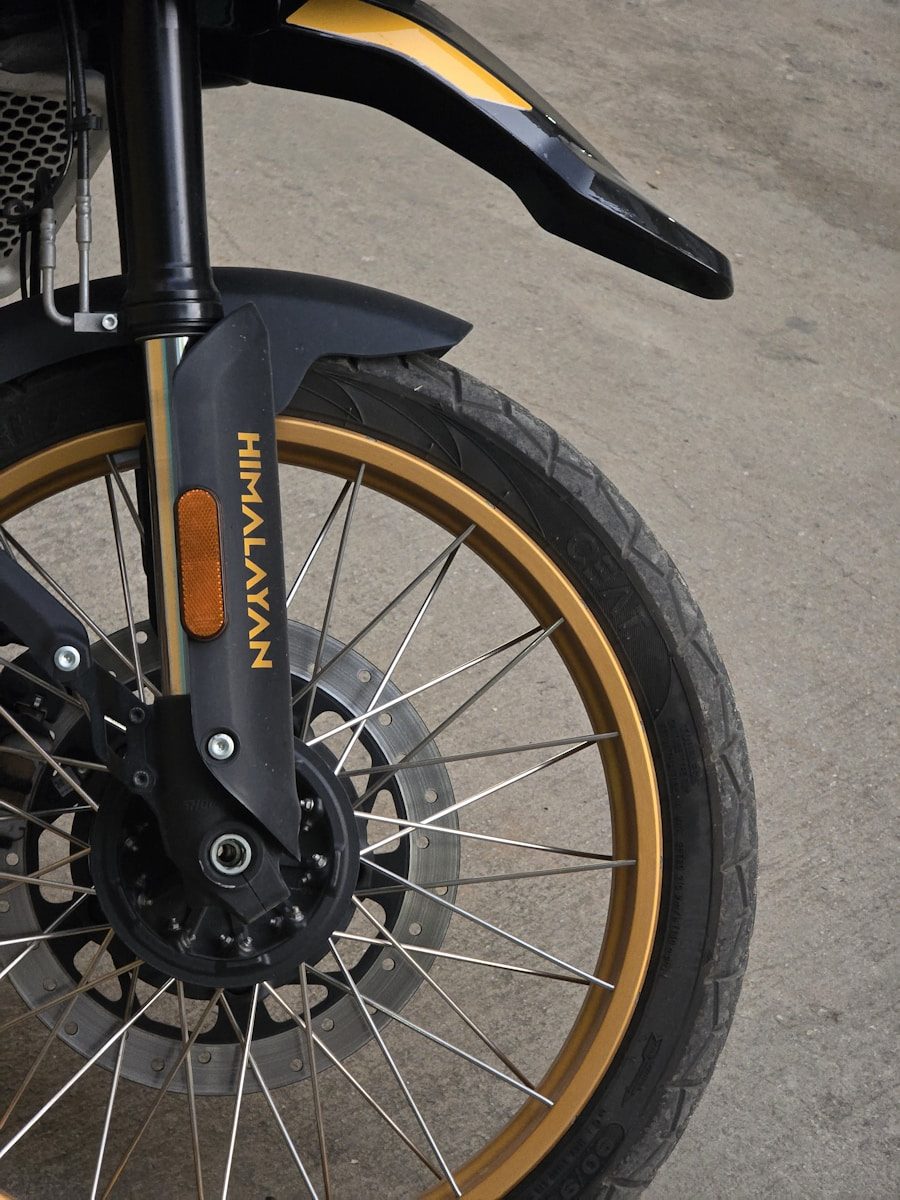
The materials used for wheel weights matter on motorcycles more than on cars. Adhesive weights stick directly to the rim, with no exposed sharp edges, suiting modern alloy and forged wheels well. Spoke weights clip onto traditional spoked wheels and are appropriate for adventure and dual-sport bikes. Lead weights are still common but are being phased out in some regions in favor of zinc or steel alternatives that have less environmental impact.
Custom and aftermarket wheels sometimes ship with significant imbalance from the factory, requiring more weight than typical to bring into balance. Quality manufacturers control this carefully, but cheaper aftermarket wheels can demand substantial weights that look unsightly. Asking the manufacturer about typical balance characteristics before purchase prevents disappointment.
Self-balancing systems exist, primarily as ceramic balls or special fluids that move within the tire to balance dynamically as the wheel rotates. These products have devoted advocates who claim they self-correct any imbalance and adapt to wear over the tire’s life. Critics point to studies showing inconsistent results and the difficulty of measuring effectiveness. The conventional balance with weights remains the standard for most riders.
Wheel runout is related to but distinct from imbalance. Runout means the wheel itself is not perfectly round; the rim has some variation in its distance from the axle. Even a perfectly balanced wheel will hop if it has runout, and no amount of weight added or removed can correct it. Runout is checked by spinning the wheel and using a dial indicator to measure the distance to the rim at various rotational positions. Significant runout indicates a damaged wheel or improperly mounted tire.
Tire seating affects perceived imbalance. A tire that has not seated evenly on the rim looks balanced but feels unbalanced because the contact patch wobbles with each rotation. Proper seating includes inflating to the recommended bead-seating pressure, listening for the audible pop as the bead seats, and visually inspecting the seating line around the tire to confirm uniform position.
A well-balanced motorcycle is a quiet, smooth machine that lets the rider focus on the road rather than on vibration. The cost of balancing is modest, the benefit is daily, and the alternative is a riding experience compromised in subtle but cumulative ways. Treating balance as a non-negotiable part of every tire service produces the best results.