Off-road travel rewards self-sufficiency. Far from cell coverage, far from tow trucks, and often far from any other vehicle that might assist, the driver who can recover from tire damage independently has a vastly different experience than the driver who cannot. Building the skills, carrying the gear, and practicing the techniques before they are needed turns potential emergencies into manageable inconveniences.
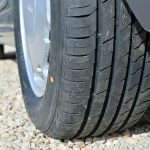
The most common failure is a sidewall puncture. Off-road terrain is full of sharp rocks, cactus spines, sticks, and metal debris from previous travelers. A sidewall hit from a sharp rock can produce a tear that no plug can fix, while a tread puncture often plugs successfully. Recognizing the difference quickly determines the recovery approach.
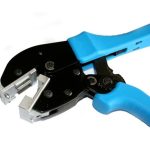
A basic recovery kit starts with a quality tire plug kit. The cheap kits sold at general stores often have weak plugs and dull insertion tools that fail under field conditions. Higher quality kits include sturdy plug strings, a robust insertion tool with a properly shaped tip, and lubricant for easier insertion. Plugs work for tread punctures up to a certain size; larger holes require multiple plugs or alternative methods.
Compressed air is the second essential. A puncture lets out air; recovery requires putting air back. Portable compressors range from small twelve-volt units that take twenty minutes per tire to professional units that fill in minutes. Battery-powered compressors offer convenience but limited capacity. CO2 tanks fill quickly but are limited to one or two tires per tank. The best practice is a quality compressor capable of repeated full fills.
A gauge that reads accurately at all pressure ranges allows verification of repairs and final inflation. Digital gauges have largely replaced mechanical ones, with features such as pressure release, programmable target pressures, and backlit displays. Carrying two gauges allows cross-checking when one reading seems wrong.
Plugging a tread puncture follows a routine sequence. The puncture is located, often by the hissing sound or visible object. The object is removed, ideally with pliers. The hole is reamed with the rasp tool to roughen and slightly enlarge the hole for plug insertion. A plug is threaded through the insertion tool, lubricated, and pushed into the hole until only a short piece protrudes. The insertion tool is removed, leaving the plug in place. Excess plug material can be trimmed flush, though a small protrusion is harmless. The tire is reinflated and checked for sealing.
Sidewall damage is more serious. Plugs do not work on sidewalls because the material moves too much and the puncture is rarely a simple round hole. Some specialty plugs designed for sidewalls exist, but reliability is poor. The traditional sidewall recovery is a tire boot, a heavy patch that goes inside the tire to seal larger holes. Boots require dismounting the tire from the rim, which is impractical on most trails without dedicated equipment.
A spare tire eliminates much of this complexity. A full-size matching spare allows simple wheel changes for any unrecoverable damage. Many off-road builds carry their spare on a swing-out carrier at the rear, accessible without unloading gear. Smaller temporary spares should be avoided for serious off-road use because they cannot handle rough terrain and may fail at the worst moment.
Bead unseating is a specific failure mode of low-pressure operation. A tire that has rolled off its bead during cornering or a hard side impact loses all air immediately. Reseating the bead requires a high-volume compressor or other inflation source that delivers more air than the leak allows out. Some drivers carry ratchet straps that can be wrapped around the tire’s circumference to compress the sidewalls inward and force the beads against the rim during inflation. Others use ether or starter fluid sprayed inside the tire and ignited, a dangerous technique that should only be used by experienced drivers in genuine emergencies.
Recovery from a damaged wheel adds complexity. A bent rim that no longer holds air requires either replacement, hammer correction in the field, or use of the spare. Hammer correction sometimes works on steel wheels using whatever heavy object is available and a flat rock as a backing. Aluminum wheels rarely respond well to field repair attempts and usually require the spare.
Flat-tire recovery in challenging positions, such as a tire flat against a rock face or a wheel buried in soft sand, may require winching or jacking creatively. A high-lift jack handles many such situations but requires careful technique to avoid the lift jack’s notorious instability. A bottle jack with a wide base, possibly with a wood plate to spread the load, is safer in many positions. Multiple jacks can be useful for complex situations where two corners must be lifted simultaneously.
Communication is the underrated component of off-road tire recovery. Letting someone reliable know the planned route and expected return time means that, even if a recovery fails, help is coming. Satellite communicators have become affordable and provide global coverage; their value during a real emergency far exceeds their cost. Cell phone coverage is inadequate for serious remote travel, and reliance on it is a planning failure.
Practice is what turns gear into capability. Plugging a tire in the driveway with a screwdriver-induced hole teaches the technique without trail pressure. Reseating a bead at home builds the muscle memory. Changing a wheel on the side of a flat parking lot is far easier than the first try in mud at sundown. Drivers who practice rarely need to recover; they learn what their gear can and cannot do, and they build redundancy into their kit accordingly.
Self-sufficiency is the heart of off-road travel. The vehicle, the gear, and the driver form a system that handles the unexpected. Tire damage is one of the most common unexpected events, and being prepared for it is one of the clearest signs of a driver who takes the activity seriously.